Wednesday, 15 May 2013

Metalwork: Making a copper bangle

I made this bangle with the same method I made rings before, by stamping patterns onto the strip of metal before I bent it into the right shape. I used a file to smooth out the marks that the punches had left on the other side. I wanted the outside to be completely plain and not patterned, to look simple and sophisticated
I started using a fairly rough file, to make it flat, and then smaller, smoother files to make the surface smooth. I decided I wouldn't polish it, because I wanted to keep the satin finish that I got from the wet and dry paper.
My main aim for this bangle is so that the pattern can only be seen when the bangle is not being worn, and much of the items beauty can only be seen by the owner of it.


Metalwork: using resin.

 Inspired by Clare Collinson's silver and resin jewellery, I decided to try using resin in my own jewellery. I first made three copper hoops in different sizes, and used silver solder to solder them to a base piece. I found it difficult at first to get the solder to go all the way around the hoops, as the hoops were heating up a lot faster than the base piece. I then used some wire to make a zig zag shape the piece could sit on, to let heat underneath the base piece, and heat it more evenly. once the soldering was done, I carefully cut pieces of paper to fit in the hoops. these were photocopies of a feather and a butterfly's wing, and I chose each piece carefully to show pieces of interesting pattern.
 I then mixed the resin and filled each of the hoops half full with resin. I left this to harden overnight. I then carefully cut pieces of real feather and butterfly wing into strips, to try to make a zebra pattern from them. I arranged these pieces on top of the set resin, then mixed some more resin and poured it on top. when I was pouring it, I first dripped a bit on each piece, so it would stay where I wanted it when I put the rest of the resin in.
After the last layer of resin had hardened, I noticed some of it had leaked, or possibly overflowed, and had stuck the piece to the paper towel it was resting on. I quite like the effect it has given, because now there is a raised pattern, instead of a plain copper back.


Metalwork with ceramics: making a brooch.

For this brooch, I wanted to use my ceramic piece with diamonds on, but I didn't want the metal part to just hold the piece, I wanted it to be extra decoration and detail, not just functional. I decided to make a diamond shape to hold the ceramic piece, just by tension, not using glue or attaching it in any other way. this worked well, and I then soldered on a pipe along one edge, to hold a pin so that it could be a wearable item. I then made the pin, and cut another diamond to make an end for the pin, which would continue the pattern and theme further.
I made another brooch in a similar way, and I think these two brooches could be worn together, and depending on how they are positioned, could make other patterns.

Monday, 13 May 2013

Ceramics: Using coloured slip

I wanted to make a bangle, inspired by Erin lightfoot's ceramic bangles, but I wanted my pattern to be on the inside, Like the copper rings I made. I did this by painting patterns onto white clay using coloured slip, before making it into a bangle.

For my first bangle, I decided to use the diamond shape I have been looking at, and use these as a base pattern, and put other more intricate patterns onto these. I used different types of pattern I have been looking at, animal pattern, pattern from process and patterns which have another purpose.

I then used the same method of painting with slip, but onto smaller pieces, which I then made into beads with pattern on the inside. I tried to keep the outside as plain as possible to contrast with the patterned interior.
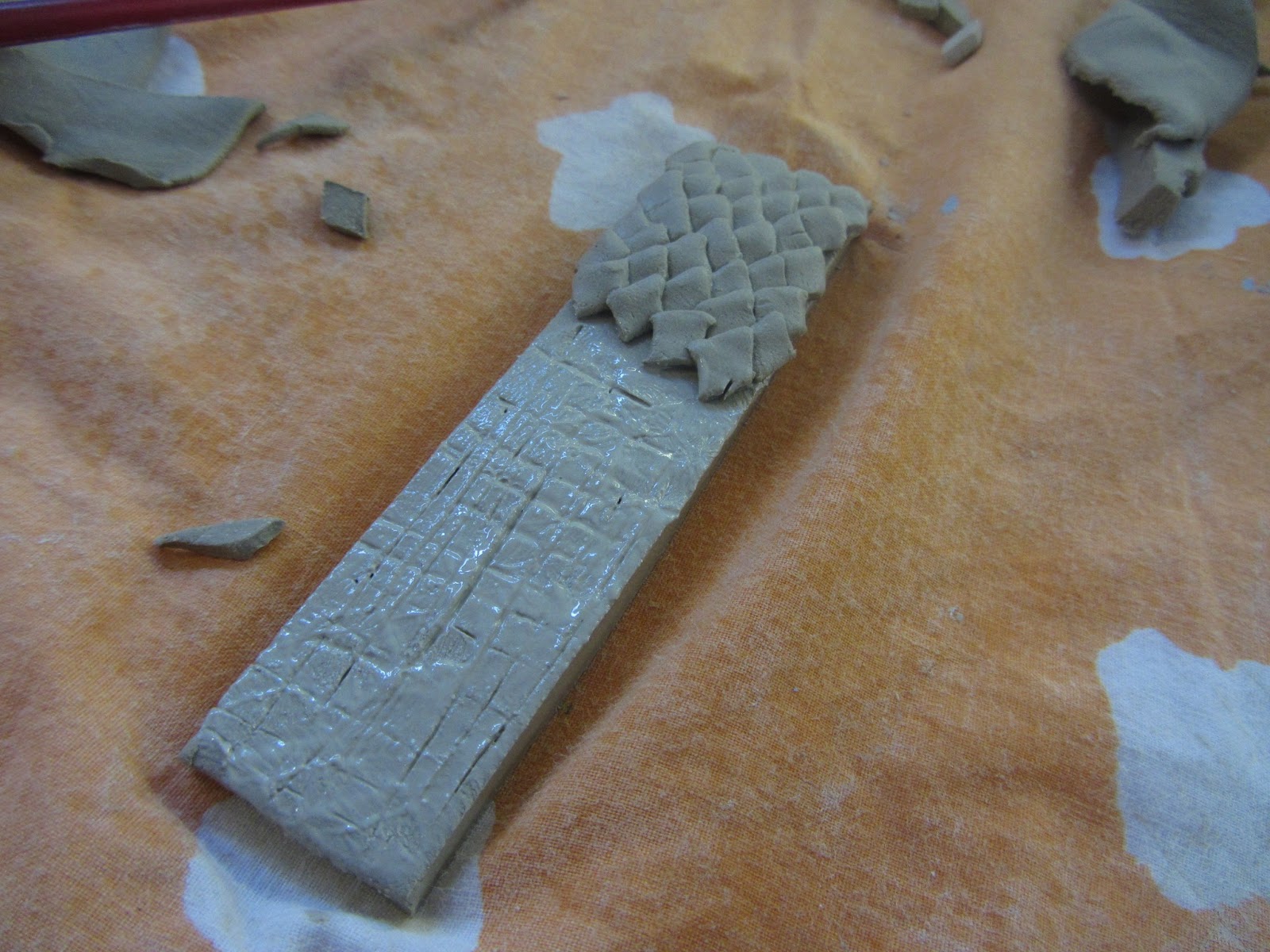
 I then wanted to experiment with putting texture on, so I decided to make a scaly, snake skin texture, because this used the same shape repeated so would make a regular pattern. Once I had put the texture on, I joined the ends and carefully cut so the outside was completely flat
 This gave the inside edge a wobbly effect, which I quite like against the very clean line of the outside.

 My last bangle just had pattern painted on all around the inside, with the hope that when it is being worn, it will look completely plain and simple, and only the person wearing it will know what is on the inside.

Glasswork: After Firing

I think each of my glass pieces have qualities that I like, In this one, the confetti glass has melted on the top to give a slightly textured surface, and has created a fairly random pattern because of the way it melts. The two pieces with copper encased in them have also changed quite a lot, in that the copper has oxidised and has changed colour in the kiln, because of the heat. I quite like these colours, and also there are some tiny bubbles trapped with the metal which I think is quite an interesting feature.


In the one with pieces of black glass, the glass shards, which were squares and triangles to begin with, have melted and spread out to make quite interesting smooth, round shapes, but still have an obvious texture and stand out from the flat background. Also they are very shiny in comparison to the base piece.

Wire work with ceramics and textiles

I wanted to include a textile element in one of my ceramic pieces, and also use metal to create a mixed media piece.I decided to use brass wire, and I made the wire frame curved, so as to be a statement necklace. I made the frame so the textile element could be woven through and sewn on to the wire. I used the large ceramic piece as the centre piece, and had two smaller ones on each side. I kept the colour scheme neutral so the ceramic pieces stand out and are the focal point. I pleated and stitched parts of the ribbon to add detail without taking the focus away from the ceramic pieces. I may add further textile parts to it at a later date, but I don't want to make it too busy and spoil the subtlety of it.


Glasswork: pattern and texture


 I wanted to experiment with pattern and texture in glass, so I first laid small pieces of black glass onto a small sheet of clear glass, so there would be a texture when it came out of the kiln.
I also did the same thing but using confetti glass in different colours, inspired by snake skin. I used a very small amount of vaseline to make sure the pieces wouldn't move when it is being put into the kiln.
 I then started looking at encasing things between two pieces of glass. I did this with copper, because the glass gets very hot in the kiln, so things with a low melting point like plastics would not keep the pattern as I wanted. I cut copper into the shapes I wanted, to make zebra pattern and a repeating pattern of diamonds. I also used copper wire to make a handle so the pieces could be hung, or possibly be made into jewellery, although they would be very heavy to wear.
 I drew the pieces as they look before going in the kiln, so I can compare these pictures to how the glass pieces look after firing.