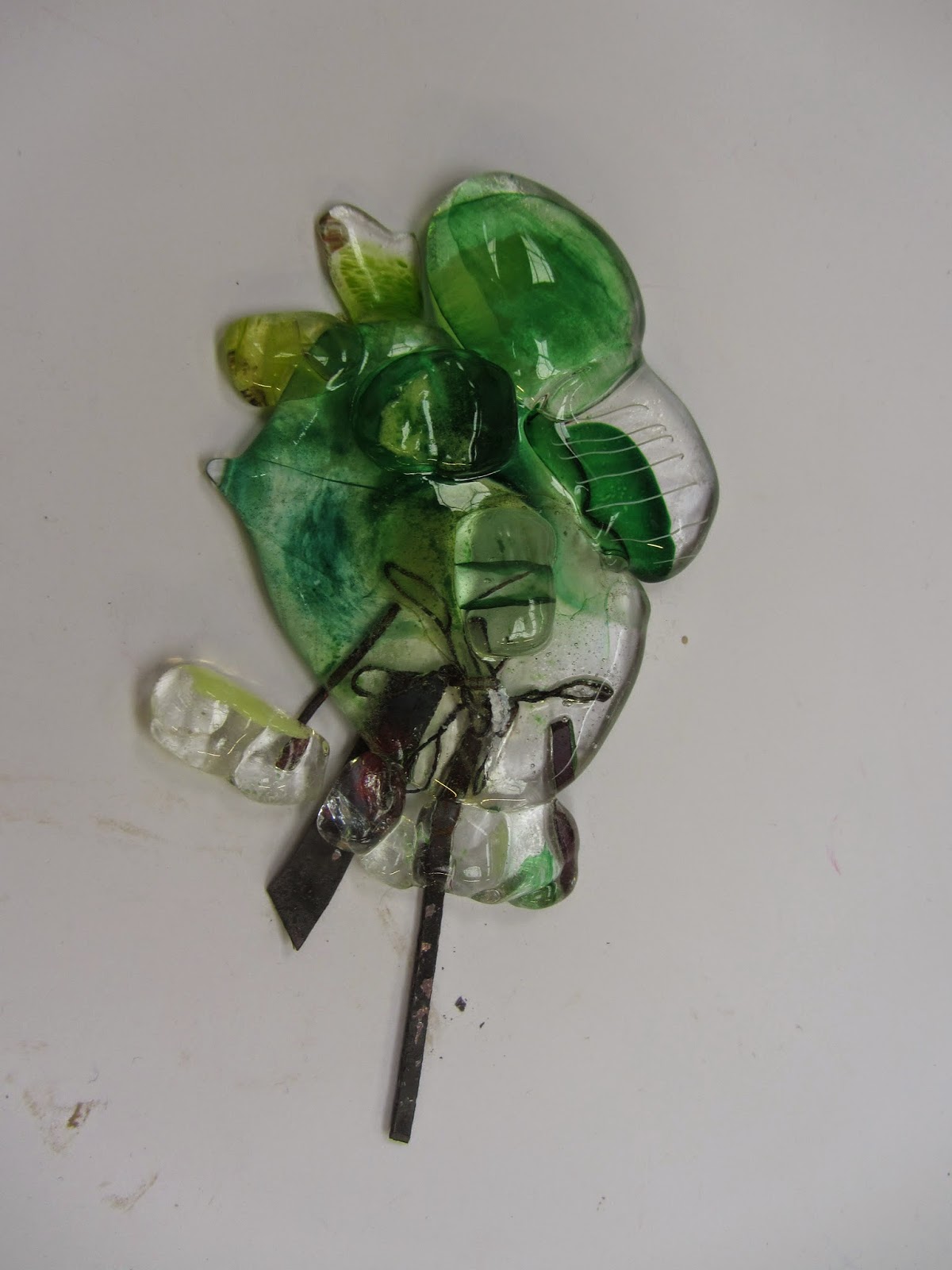
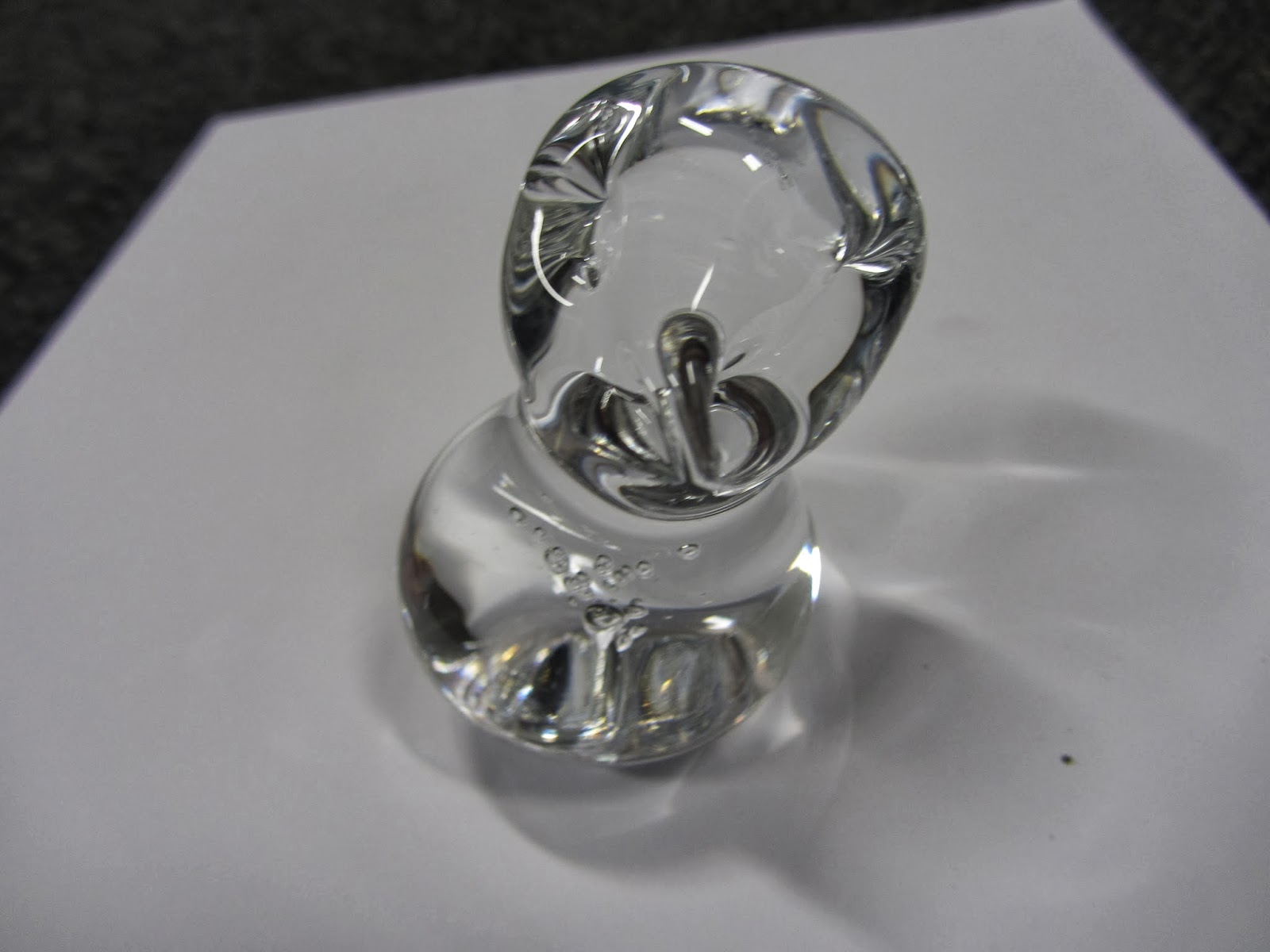
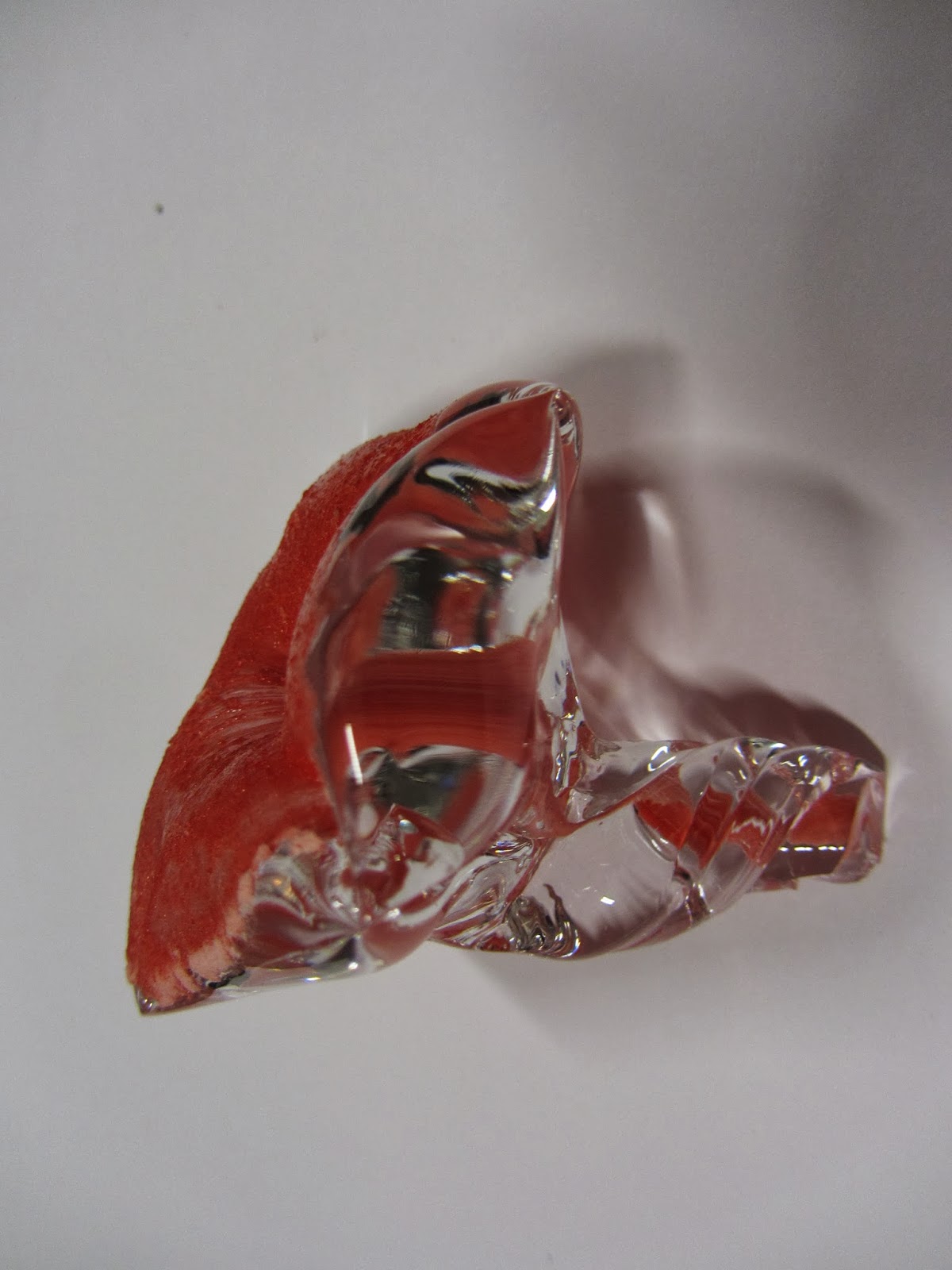
Glass powder and flux heated from underneath to give a textured finish
Layer of hot glass, pieces of copper, more glass dropped on top
Copper wire encapsulated in hot glass
Copper wire encapsulated in fused glass
Copper sheet kiln fired with scrap glass pieces and coloured glass powder
Copper sheet kiln fired with glass powder on and to the side of it.
Through my testing I have noticed a familiar theme, which is mixing copper with glass. I think this could be a good theme to take forwards, experimenting more with shaping the copper before it gets put in the glass, and possibly patinating or texturing it after.
Showing posts with label hot glass. Show all posts
Sunday, 12 April 2015
Hot Glass: Moss
I hope to make more of these glass pieces as both a way to improve my glass skills, and to make a piece to convey the idea of things in nature being similar, but never exactly the same.
Kiln Glass: Fusing
I collected green and orange glass from the hot shop scrap bins (clear glass is recycled but bits with colour are put in a bin which we can use for fusing, casting, slumping etc.) I chose to stick with this colour scheme as these are the colours of moss I have been looking at. I arranged the scraps on a kiln shelf which had been prepared with batt wash to stop the glass sticking, and to give them a smooth back. I arranged the pieces into shapes, and also put some bits of copper under the glass, inbetween layers and on the top, to see how it would react with the glass and the heat of the kiln.
These were just test pieces, but if i wanted to further this technique, I could make specific components in the hot shop, to then fuse together in the kiln. My favourites were the ones I made from the glass powder, as these had a more unpredictable texture, where the powder had melted and separated and left holes and gaps.
The copper worked well, changing colour to give different reds, maroons and black. I could cold work both the glass and copper, to put texture onto the glass or to change the colour of the exposed parts of copper to their original colour.
I feel that some of these pieces are fairly boring, as I controlled them too much. I think the ones that did something unexpected were good, as they made me think about where else I could take it, rather than creating a piece I was expecting.
These were just test pieces, but if i wanted to further this technique, I could make specific components in the hot shop, to then fuse together in the kiln. My favourites were the ones I made from the glass powder, as these had a more unpredictable texture, where the powder had melted and separated and left holes and gaps.
The copper worked well, changing colour to give different reds, maroons and black. I could cold work both the glass and copper, to put texture onto the glass or to change the colour of the exposed parts of copper to their original colour.
I feel that some of these pieces are fairly boring, as I controlled them too much. I think the ones that did something unexpected were good, as they made me think about where else I could take it, rather than creating a piece I was expecting.
Labels:
copper,
fusing,
glass,
glass fusing,
green,
hot glass,
hot shop,
kiln,
kiln glass,
metal,
mixed materials,
mixed media,
moss,
nature,
orange
Hot Glass: Prunts, Inclusions and imprints
I first put copper in glass by dropping a blob of hot glass onto a graphite sheet, dropping copper onto that, then putting more glass over the top to trap the copper inside. This works, and I then moved onto doing this in 3D rather than on a flat surface.
The technique was the same, the second glass layer is dropped on top, as if the glass with copper on is put back in the furnace it could easily fall off and contaminate the glass.
I used the same method to create a hollow form with copper inclusions and colour.
I talked to simon about getting texture onto the glass and he told me about prunts, which are stamps used on hot glass. I used a raspberry shaped graphite stamp to shape a blob of glass.
I think a collection of these could be a nice mini installation.
I then tried using real moss, and other bits of organic matter, to make imprints in glass. I dropped the glass on top of the pieces, which made them catch fire and smoke a lot, but the glass cooled quick enough to capture the texture before the plants burnt away.
The technique was the same, the second glass layer is dropped on top, as if the glass with copper on is put back in the furnace it could easily fall off and contaminate the glass.
I used the same method to create a hollow form with copper inclusions and colour.
I talked to simon about getting texture onto the glass and he told me about prunts, which are stamps used on hot glass. I used a raspberry shaped graphite stamp to shape a blob of glass.
I think a collection of these could be a nice mini installation.
I then tried using real moss, and other bits of organic matter, to make imprints in glass. I dropped the glass on top of the pieces, which made them catch fire and smoke a lot, but the glass cooled quick enough to capture the texture before the plants burnt away.
Labels:
copper,
glass,
glass blowing,
hot glass,
hot shop,
imprint,
inclusion,
moss,
organic matter,
plants,
prunt,
prunts
Sunday, 1 December 2013
Glasswork: Blowing glass
In the hot glass workshop, I had my first go at actually blowing glass. I found it difficult to keep turning the iron, and keeping the glass on center is very important so the bubble is in the middle and the sides are even.
I used the newspaper pad to shape the glass, before thumbing in a bubble. I used the jacks to cut in and did eventually end up with some sort of small vessel type things. This seems to be something that needs a lot of practice.
Tuesday, 19 November 2013
Glasswork: using hot glass
A snowball, made by spinning the glass in a hoop on the floor, to get air into it, and then the glass was gathered up and rolled into a ball using kevlar gloves.
I then had a go at gathering glass from the furnace, and using the jacks to cut into the glass, to create a blob which would snap off neatly from the iron.
I then made an icicle, by pulling the blob out with tweezers, and then sticking the end back on itself. I then put one side of the tweezers into the loop and twisted the iron whilst pulling out with the tweezers to create a long icicle.
I then made some flowers, a bird (or attempted to make a bird) and another small animal which i'm not sure what it is. I experimented getting used to using the tools and using water to make a weak part of the glass that would break off to get the piece in the kiln.
Labels:
bird,
clear glass,
flowers,
glass,
glass blowing,
hot glass,
nature
Subscribe to:
Posts (Atom)